

Every founder eventually hits the same wall. You need your third engineer yesterday, your budget won’t stretch to a UK salary with National Insurance and pension contributions stacked on top, and every recruitment agency you’ve spoken with wants a fee equivalent to 20% of first-year salary just to send you a shortlist of maybes. This is exactly why pre-screened talent networks exist, and why they’ve quietly become the default hiring model for early stage startups across the UK, Europe and the US.
The short answer to which network wins: there isn’t one. IMÒ Talent suits bootstrapped startups needing dependable mid-level talent on a flat monthly fee, Andela suits venture-backed companies building AI infrastructure at scale, and Toptal suits anyone who needs an elite specialist for a defined, high-stakes sprint and can afford premium hourly rates. Picking wrong isn’t fatal, but it wastes months you don’t have.
A pre-screened talent network differs from traditional recruitment in one structural way: the vetting happens before you ever see a candidate, not after. A conventional startup recruiting agency sources candidates reactively once you brief them, then runs interviews and reference checks on your timeline. Pre-screened networks flip that. IMÒ Talent, Andela and Toptal all maintain standing pools of professionals who’ve already cleared technical assessments, communication screens and in some cases full bootcamps, so the moment you submit a brief, you’re matching against people already proven capable rather than starting the vetting clock from zero. That’s the entire value proposition, really. Speed through pre-work rather than speed through corner-cutting.
Comparison Table
Here’s where the three networks actually diverge, laid out plainly rather than buried in marketing copy.
Criteria | IMÒ Talent | Andela | Toptal |
|---|---|---|---|
Target user | Bootstrapped startups, SMEs | Enterprises, funded scale-ups | Companies needing elite specialists |
Talent pool origin | Africa, GMT+1 aligned | 135+ countries, global | Global, top 3% acceptance rate |
Vetting method | Bootcamp assessments | AI-driven + technical + leadership tests | 5-stage screening, live interviews |
Pricing model | Flat monthly subscription (roughly £380 to £500/month per talent) | Custom enterprise retainers | Hourly, £65 to £160/hour range |
Time to match | 48 to 72 hours | Days | 24 to 48 hours |
Contract commitment | 3-month minimum | Often 12-month engagements | Flexible, hourly or part-time |
Best for | First hires on tight runway | AI scaling, compliance-heavy hiring | Fractional leadership, mission-critical sprints |
Worth sitting with that table for a second before moving on, because the differences aren’t cosmetic. They shape whether you’ll be writing a monthly invoice you can forecast or an hourly one that fluctuates with scope creep.
IMÒ Talent
IMÒ Talent occupies a slightly unusual position in the startup recruiting conversation. It’s not trying to be Toptal’s cheaper cousin, and it’s not chasing Andela’s enterprise contracts either. It’s built specifically for the founder who needs a React developer or a growth marketer next month, not next quarter, and who cannot justify the hourly economics of an elite freelance marketplace.
Vetting Process And Talent Pool
Candidates go through a structured bootcamp covering technical skill, business acumen and communication, and only the professionals who clear that bar make it into the pool that clients actually browse. This isn’t quite the multi-week gauntlet Toptal runs, nor the AI-driven production testing Andela applies to its engineers, but it’s rigorous enough that clients report a 95% satisfaction rate across placements, according to the platform’s own published figures. The pool itself draws from across Africa, with particular density in software development, UI/UX design, data engineering, project management and business strategy roles. What sets it apart from a general recruitment agency isn’t just the vetting though, it’s the timezone alignment. GMT+1 overlap means a London founder can run daily standups without asking someone to join a call at midnight, which sounds trivial until you’ve actually tried managing an offshore developer eight hours out of sync.
Pricing And Contract Terms
The pricing structure is where IMÒ Talent breaks from the pack most clearly. Instead of hourly billing or commission-based markups, clients pay a flat monthly subscription per hired professional, typically in the £380 to £500 range, with a three-month minimum commitment attached. That minimum is worth flagging honestly. It’s not nothing for a pre-seed startup watching every pound, but it’s also roughly what you’d spend on a single week of a Toptal specialist at premium hourly rates, which puts the trade-off into perspective fairly quickly.
Best Fit Scenarios
This network makes the most sense for founders hiring their first or second technical employee, for SMEs replacing an underperforming local hire without wanting to repeat a six-week recruitment process, and for anyone whose primary constraint is monthly cash flow predictability rather than access to the single best specialist alive. If your startup is still validating product-market fit and every pound matters, this flat-fee model removes a variable that otherwise causes real budgeting headaches, a pattern echoed in independent comparisons of curated talent pools versus open marketplaces when weighing cost against speed of onboarding.
Andela
Andela has evolved considerably from its early reputation as an African developer training academy into something closer to what it now calls a human compute layer for production AI. That shift matters for anyone comparing it against smaller networks, because Andela today is chasing a different customer entirely.
Vetting Process And Talent Pool
The screening process combines AI-driven assessment tools with structured technical interviews and leadership evaluations, pulling from a pool spanning more than 135 countries. Andela’s own figures cite over 17,000 certified AI-native engineers and 200,000-plus professionals trained on emerging technologies, numbers that dwarf what a boutique network could realistically offer. Where this matters practically: if you need five engineers who’ve already worked on retrieval-augmented generation systems or LLM fine-tuning, Andela’s scale means that talent actually exists in the pool rather than being sourced reactively, a distinction explored further in comparisons of platform-by-platform vetting standards across major networks.
Pricing And Contract Terms
Pricing runs on custom enterprise quotes rather than published rates, and engagements have historically leaned toward longer commitments, often structured around 12-month arrangements rather than short sprints. There’s also a detail that catches people off guard: converting an Andela contractor into a direct employee can trigger a substantial buyout fee, a clause worth reading closely before assuming you can simply absorb a great contractor onto payroll later.
Best Fit Scenarios
Andela fits venture-backed companies past their seed round, particularly those with compliance obligations around cross-border payroll, data governance or enterprise procurement requirements that a smaller network simply isn’t built to satisfy. It’s the right call when a startup has raised a Series A or later, when the venture capital backers on your board expect polished vendor relationships, or when you’re deploying blended teams across multiple regions and need the reporting infrastructure to match. It’s the wrong call for a two-person founding team trying to ship an MVP on a shoestring, where the enterprise overhead simply doesn’t pay for itself yet.
Toptal
Toptal built its entire brand around exclusivity, and it’s earned that reputation through a screening funnel that rejects roughly 97% of applicants. That statistic gets repeated so often it risks sounding like marketing fluff, but talk to anyone who’s actually gone through Toptal’s client-side matching process and the quality difference is genuinely noticeable within the first working week.
Vetting Process And Talent Pool
The vetting runs across five stages: language and communication screening, deep technical assessments, live interviews, and a test project before anyone ever gets listed as available. This is considerably heavier than IMÒ Talent’s bootcamp model and arguably more rigorous than Andela’s AI-driven testing, largely because Toptal is optimising for a different outcome entirely, individual excellence rather than scalable team deployment. The talent spans developers, designers, marketing experts, management consultants, project managers, product managers and sales specialists, all under one umbrella rather than split across separate verticals.
Pricing And Contract Terms
Rates sit at the premium end, generally between £65 and £160 an hour depending on seniority and specialism, billed hourly, part-time or full-time with no long-term lock-in required. There’s a genuinely useful safety net here too: a trial period where you only pay if you’re satisfied with the work, which removes a lot of the anxiety that comes with committing budget to an unfamiliar contractor. That flexibility is precisely what recruiters at smaller startup recruiting agencies often can’t replicate, since most conventional recruitment fees are locked in regardless of eventual performance.
Best Fit Scenarios
Toptal earns its premium when the task is narrow, urgent and consequential, an interim CTO steering a critical migration, a fractional CFO modelling a funding round, a senior architect fixing a scaling crisis before a product launch. It’s a poor fit for volume hiring or for building a five-person engineering team on a monthly budget, since the hourly economics compound quickly at that scale. For further context on how Toptal stacks up against other elite vetted networks on cost efficiency at volume, this bulk remote hiring framework is worth a look.
Pros And Cons Of Each Network
Laying out the trade-offs side by side tends to clarify more than another paragraph of prose ever could:
IMÒ Talent — Strongest for predictable monthly costs and GMT+1 timezone overlap; weakest on brand recognition and overall pool size compared to global giants.
Andela — Strongest for enterprise compliance, AI-native engineering depth and global reporting infrastructure; weakest for lean teams needing flexibility or fast, cheap first hires.
Toptal — Strongest for elite, mission-critical individual talent with genuine hire flexibility; weakest for anyone trying to build a full team without an enterprise-sized hiring budget.
How Should A Startup Choose Between These Networks?
Founders tend to overthink this decision by treating it like a single permanent choice, when really it’s closer to picking the right tool for the current sprint. Ask what stage you’re actually at. Pre-seed and seed stage companies chasing product-market fit rarely need Andela’s enterprise scaffolding, they need one or two dependable first hires who won’t blow the monthly burn rate. Series A and beyond, especially companies scaling AI infrastructure or hiring across multiple regions simultaneously, start bumping into the exact compliance and volume problems Andela was built to solve. And regardless of stage, if there’s a single make-or-break technical problem sitting between you and a launch date, paying Toptal’s premium for two weeks of elite focus is usually cheaper than the cost of delay.
Budget matters more than most founders admit publicly. A flat monthly subscription model removes the anxiety of watching an hourly meter run, which matters enormously when your finance function is basically a spreadsheet and a prayer. Hourly models, conversely, reward precision, you pay only for hours actually worked, which suits narrowly scoped projects far better than ongoing team-building.
What Makes Pre-Screened Talent Networks Different From Traditional Recruitment?
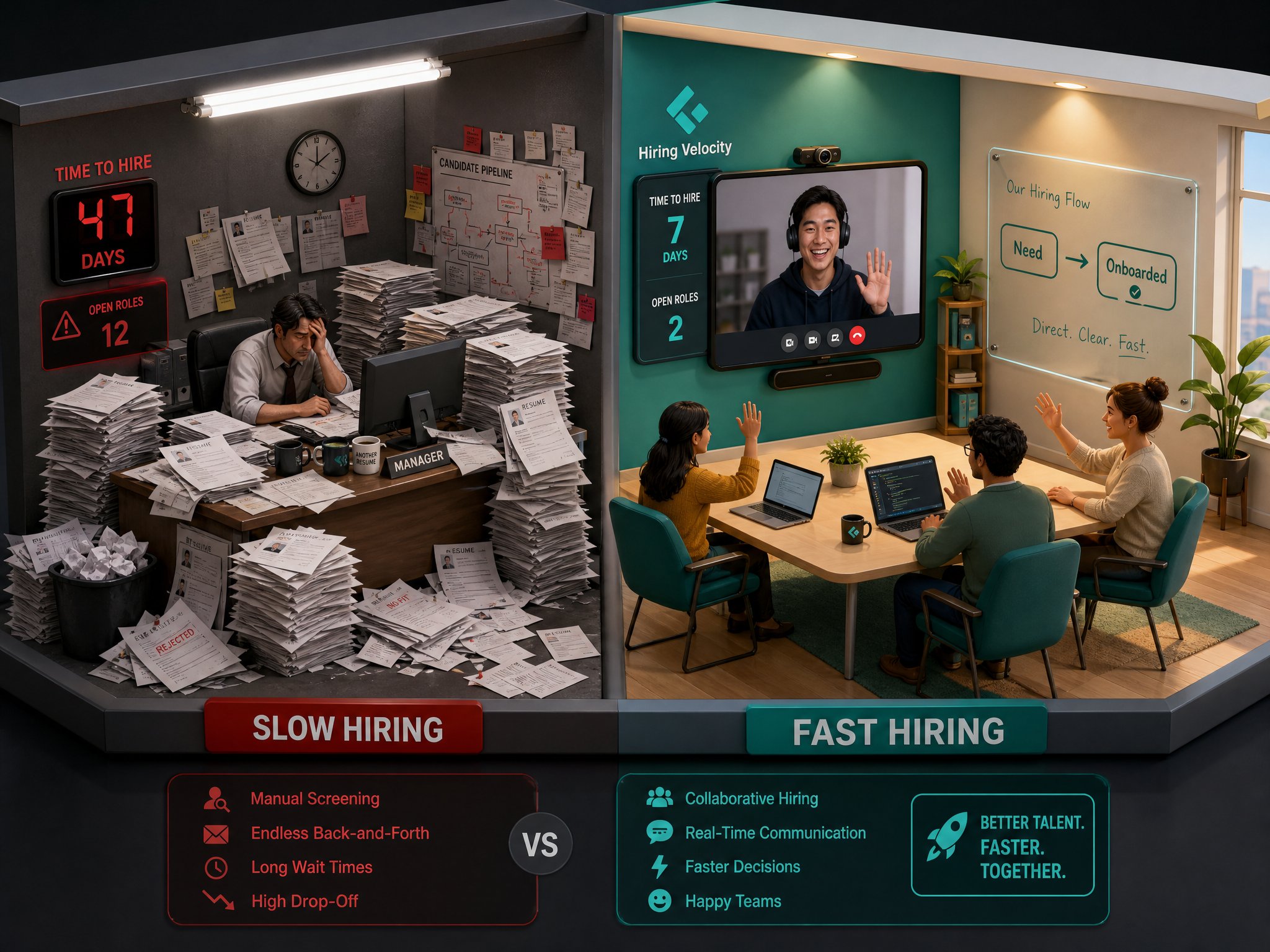
A traditional recruitment agency operates on a fundamentally reactive hiring model. You brief a recruiter, they go source candidates from their existing network or cold outreach, run initial screens, and present a shortlist weeks later, often charging a placement fee worth 15 to 25% of first-year salary regardless of how long that person stays. Pre-screened networks compress that entire cycle because the sourcing and vetting already happened before your brief ever arrived. The candidate pool is standing, tested, and ranked, so matching becomes a filtering exercise rather than a fresh search.
This distinction explains why pre-screened networks have become such a powerful recruiting tool inside the broader startup ecosystem, where speed genuinely functions as a competitive advantage rather than a nice-to-have. It also explains why independent recruiter relationships and specialist recruitment agencies still exist for niche roles, like a fintech recruiter hunting for a compliance specialist with very particular regulatory experience, since no pre-screened pool can anticipate every conceivable skillset. For a broader look at how pre-vetted professionals fit into overall scaling strategy, the analysis in what pre-vetted remote professionals actually solve covers this ground thoroughly.
Final Verdict
There’s no universal winner here, and pretending otherwise would be dishonest. If you’re a founder hiring your first two or three employees on a runway measured in months rather than years, IMÒ Talent’s flat monthly pricing and GMT+1 alignment removes friction you genuinely don’t have bandwidth to manage. If your startup has cleared a funding round and needs to build AI infrastructure or manage compliance across borders, Andela’s enterprise scaffolding earns its higher price tag. If you’re facing one specific, high-stakes technical or strategic problem and need the single best person available regardless of hourly cost, Toptal remains the network built for exactly that moment.
Is A Cheaper Network Ever The Wrong Choice For A Startup?
Yes, and this gets overlooked constantly in cost-focused comparisons. A cheaper monthly subscription becomes expensive fast if the role genuinely requires deep, narrow expertise that a broader vetting process simply won’t surface. Hiring a general backend developer through a flat-fee network to lead a complex machine learning migration is a false economy, you’ll pay less monthly but lose months to rework. Similarly, if your startup’s venture capital backers expect enterprise-grade vendor diligence during due diligence, showing up with a scrappy flat-fee contractor arrangement instead of a properly structured enterprise engagement can genuinely complicate a funding conversation. Cost efficiency only counts as efficient when it matches the actual complexity of the work, which is a point often missed in comparisons that focus purely on hourly rate versus subscription fee, as detailed in this breakdown of platform fees across major networks.
How Do Timezone And Communication Fit Into The Decision?
Timezone overlap gets treated as a footnote in most recruitment conversations, and that’s a mistake I’d genuinely push back on. A senior developer in a wildly different timezone might be brilliant on paper, but if your daily standups, sprint planning and ad hoc Slack conversations all happen while they’re asleep, you’ve quietly built in a 24-hour lag on every decision. IMÒ Talent’s GMT+1 positioning solves this specifically for UK and European founders, letting a London-based product manager and a Lagos-based engineer overlap almost an entire working day. Andela and Toptal both offer talent across far wider timezone spreads, which is genuinely an advantage if you’re building a follow-the-sun support team, but a liability if you need tight, synchronous collaboration on a fast-moving product sprint. Communication style matters just as much as clock alignment too. Startup culture tends to favour blunt, fast, asynchronous-friendly communication over the more formal reporting structures some enterprise-oriented networks default to, so it’s worth actually speaking with a shortlisted candidate before assuming vetting scores alone predict a good working relationship.
