

Introduction
Remote tech job boards are specialist websites where employers post distributed roles and engineers, designers, data people and product staff search for them, and the best ones let you filter by country and time zone so you can see whether “remote” actually includes you. Many don’t. That gap between the label and the reality is where most global applicants lose weeks of effort.
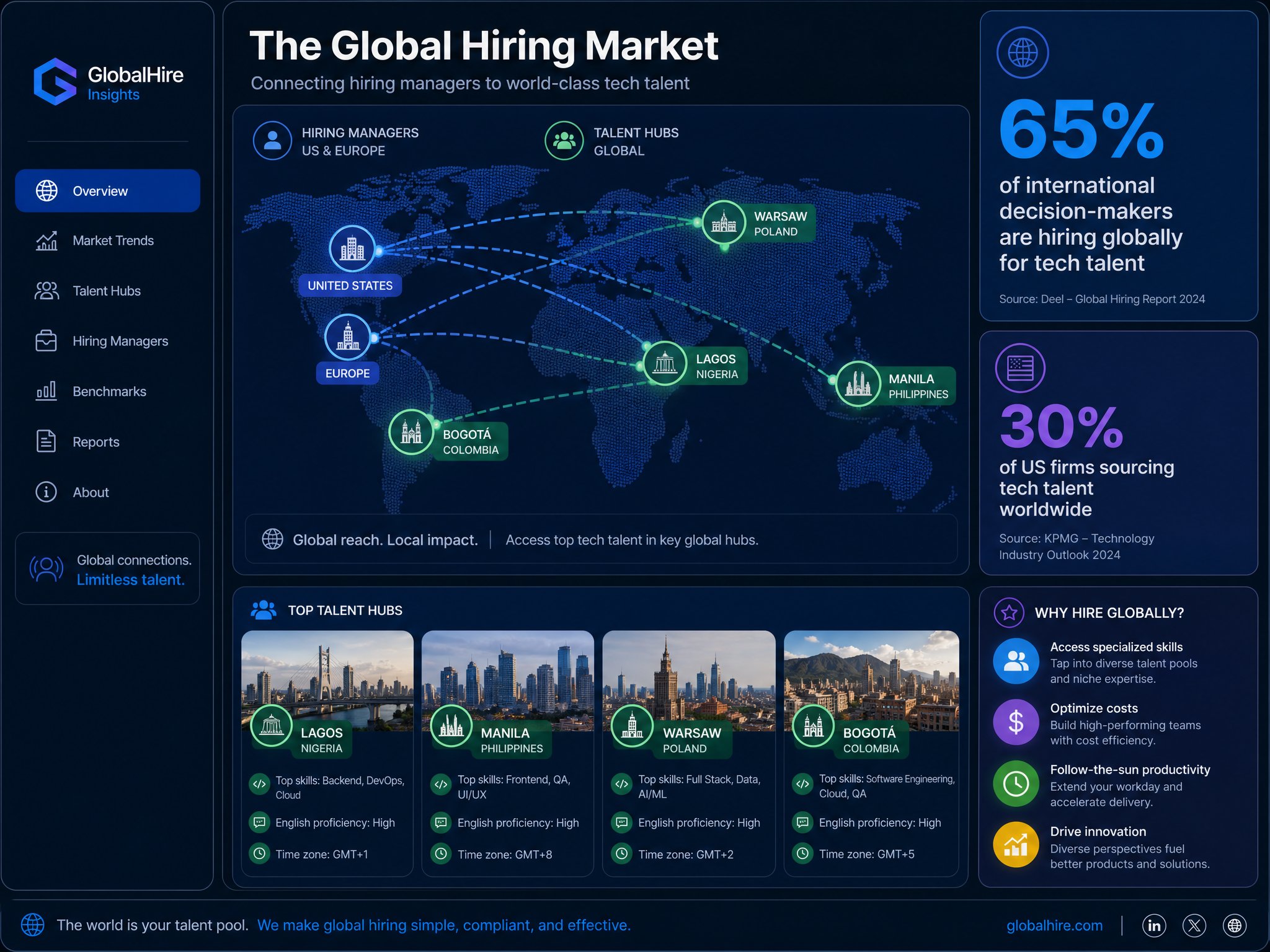
Remote’s research found that around 65% of international decision-makers are hiring globally for tech talent, which sounds like a gold rush. Yet the same market still leaves countless skilled professionals in Lagos, Manila, Warsaw or Bogotá staring at listings that quietly mean “remote in the United States”. I’ve spent years in content and SEO working alongside distributed teams, and I’ve watched good people burn out on this exact problem.
So this guide covers what these boards do, which ones deserve your time, how to smell a fake listing, and how to apply without wasting effort.
What Do Remote Tech Job Boards Do for Global Talent?
They put a vacancy and a candidate in the same room. That’s the whole trick. The rest is filtering, and filtering is where boards differ wildly.
Employer Connection
A company with no office in your country can still reach you, provided it knows how to hire you. That last clause matters. Hiring across borders means contractor agreements, employer-of-record services, payroll rules and tax exposure, so employers use boards to signal what they can actually handle. Remote’s own release put the share of US firms sourcing tech talent worldwide at about 30%. Roughly one in three. Not everyone, then, whatever the headlines say.
Demand is real, mind you. CompTIA’s analysis showed new IT job postings up 16% year over year, and coverage of the same report cited 625,633 active openings. Plenty of those are on-site, though. Remote is a slice.
Candidate Fit
Seniority, stack, time-zone overlap and visa status decide whether a role fits you, far more than job title does. A mid-level React developer in Nairobi and a staff-level platform engineer in Berlin need very different boards. One wants volume and junior-friendly entry points, the other wants salary transparency and fewer, better roles.
Platform Types
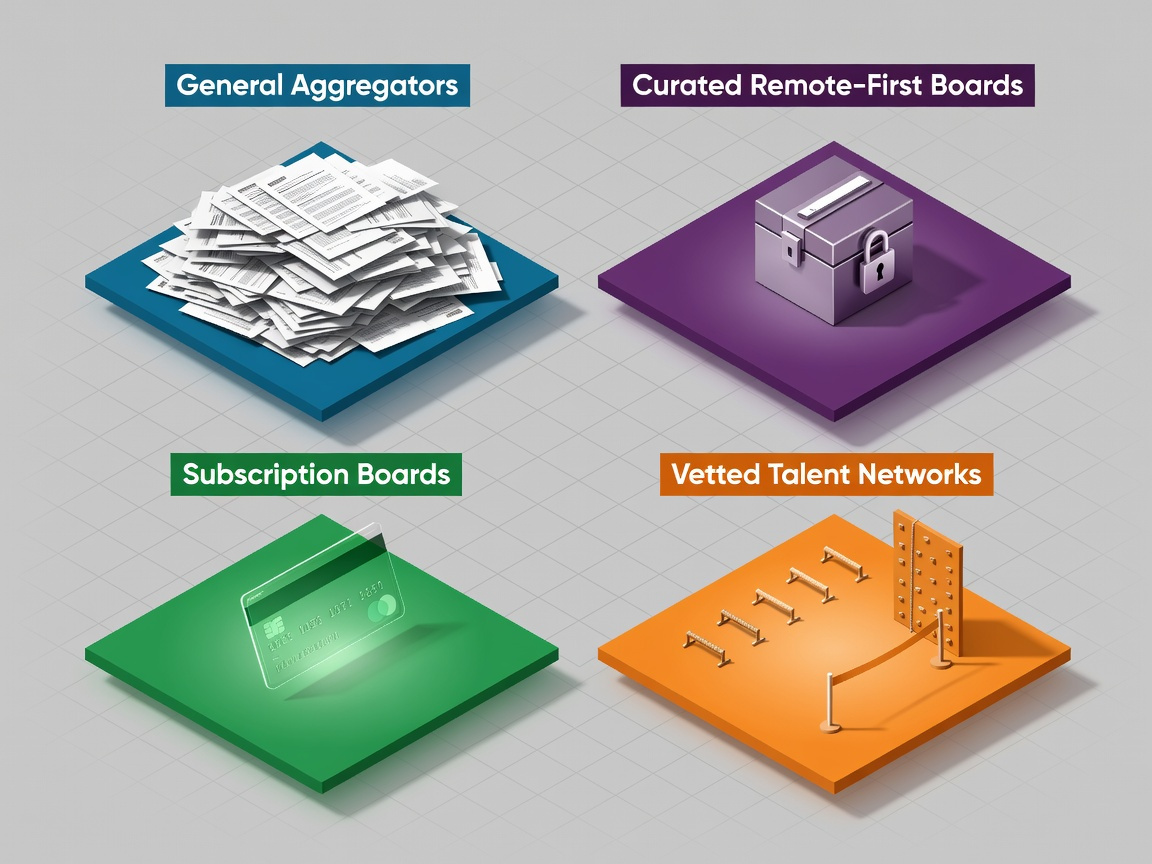
Broadly, you’ll meet four kinds:
- General aggregators that scrape and republish everything, which means volume but also stale listings.
- Curated remote-first boards where employers pay to post, so listings tend to be live and genuine.
- Subscription boards where the candidate pays for access, a model I’m sceptical about.
- Vetted talent networks and freelance marketplaces, from open-bidding sites to gated networks with multi-week technical assessments.
IMO Talent’s overview groups boards in much the same way, by startup focus and time-zone filtering needs.
Which Remote Tech Job Boards Are Worth Using?
Three come up constantly, and each has a catch.
We Work Remotely
Big, well known, and busy. Its own trends analysis draws on more than 15,400 jobs, and the regional categorisation is genuinely useful because you can see restrictions without opening every post. The catch is saturation. A good engineering role there can collect hundreds of applications within days, so being the 400th CV in the pile is a real risk. Apply early or don’t bother.
Himalayas
Himalayas earns its place on transparency. Company tech stacks, culture notes and location or visa boundaries sit right on the listing, which is exactly what a candidate outside the US needs. Its database is smaller than the older boards, so you’ll see fewer roles. Fewer, but more honest. I’ll take that trade.
Remote OK
Remote OK shows salary ranges, which is rarer than it should be, and it indexes plenty of developer roles. But it leans senior. If you’re early in your career, you’ll scroll a lot and apply to little. Mid-to-senior engineers, on the other hand, will find it one of the more efficient places to start.
Compare Boards by Features, Pricing and Job Types
Pricing models tell you who the board really works for. If employers pay, you’re the product’s audience. If you pay, ask what exactly you’re buying.
| Board | Who pays | Standout feature | Main drawback | Best suited to |
|---|---|---|---|---|
| We Work Remotely | Employers | Regional categories, high volume | Heavy competition | Mid-level developers, marketers |
| Himalayas | Mostly employers | Visa and location clarity, stack details | Smaller database | Non-US professionals |
| Remote OK | Employers | Salary ranges | Senior bias | Experienced engineers |
| Remotive | Employers | Curated categories | Narrower catalogue | Developers wanting vetted posts |
| Wellfound | Employers | Direct founder contact, equity | “Global” often means contractor only | Startup-minded candidates |
| FlexJobs | Candidates | Hand-screened listings | Subscription fee, recycled postings claim | Non-tech generalists, if anyone |
Remote Job Assistant’s audit of Remotive, for instance, looked at category mix and developer concentration, and the pattern fits: engineering heavy, selective, and modest in size.
On FlexJobs, I won’t pretend to be neutral. Community complaints that paid boards recycle scraped or expired listings were enough to keep my money in my pocket. A polished interface doesn’t turn an old listing into a new one. Check free sources first.
Choose the Right Board for Your Profile
Start with your constraints, not the board’s brand. Where do you live, which time zones can you cover, and can you invoice as a contractor?
Developers with five-plus years of experience should lead with Remote OK and Himalayas, then layer in a gated network such as Toptal or Gun.io if they can stomach a multi-week assessment. Junior people are better served by We Work Remotely, Remotive and Wellfound, plus open-source contributions that do the talking for them. Designers, marketers and data analysts can use the same boards, but filter by category rather than scanning the lot.
Freelancers face a different animal. Open marketplaces such as Upwork suffer from the “race to the bottom” complaint, where bids drag rates down. Niche specialists should avoid bidding wars altogether and pitch directly.
How Can You Tell a Genuine Global Role From a Fake One?

A genuine global role names its constraints. A fake or misleading one hides them.
Watch for vague descriptions with no stack, no team name and no salary logic. Watch for recruiters asking you to pay for “training”, “equipment” or “background checks”. Real employers don’t invoice candidates. A Gmail address instead of a company domain is another red flag, as is an interview conducted entirely over a messaging app with a “manager” who can’t tell you who your teammates would be.
Then there’s the subtler kind of fake: the real company, real job, but a “worldwide” tag that really means “US time zones, US payroll”. Treat every “anywhere” label as a claim to verify, not a promise. A quick test is to search the company’s careers page, then LinkedIn, and see whether the role appears with a different, narrower location.
What Should You Verify Before Applying?
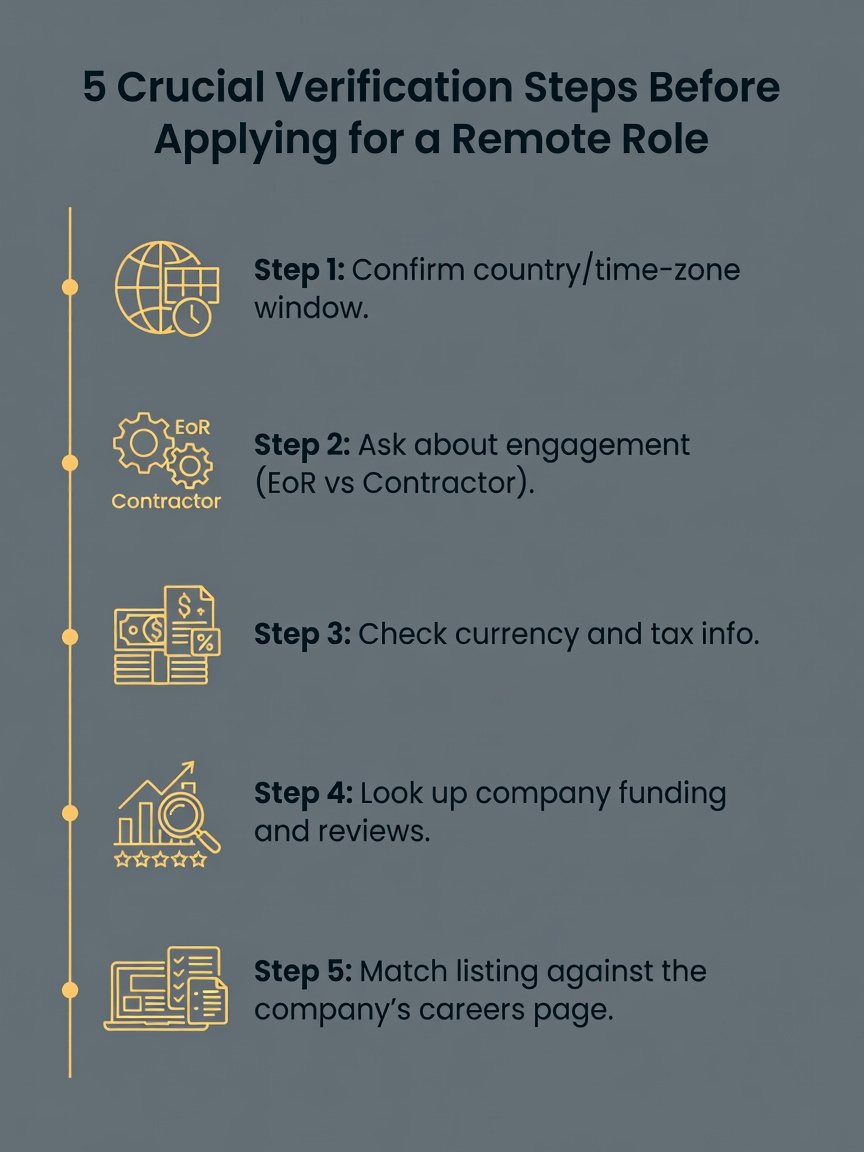
Do this before you write a single cover letter:
- Confirm the country list or time-zone window in the listing, and if absent, email to ask.
- Ask how you’d be engaged: employee through an employer of record, or independent contractor.
- Check whether payment is in your currency, and who covers fees and tax.
- Look up the company’s funding, headcount and Glassdoor-style reviews.
- Match the listing against the company’s own careers page to confirm it’s live.
Visa is a separate issue. A remote role doesn’t grant you a right to work in the United States, and many “remote” roles are open only to people already authorised to work there. If you’re hoping to relocate later, ask early whether the employer sponsors a talent visa. Many don’t, and the honest ones will say so.
How Can You Get Better Results From a Remote Job Search?

Filter hard. Apply early. Tailor properly.
Set alerts on three or four boards rather than checking twenty. The fresher the listing, the better your odds, since popular roles fill the shortlist fast. Rewrite your CV top line to mention time zone, stack and contract readiness: “Backend engineer, Python and AWS, available UTC+1 to UTC+3, contractor-ready.” Recruiters skim, so that line does the work.
Evidence beats adjectives. A public repository, a short case study or a documented project tells a hiring manager more than any “self-motivated” claim. Remote teams hire for written communication, and your application is the first sample.
Context also helps. Wharton’s research highlights onboarding and collaboration hurdles in distributed teams, so showing that you’ve worked asynchronously before is a genuine edge. And Remotive’s State of Remote Work points to return-to-office pressure reshaping flexibility, which means the supply of fully remote roles is shifting; check which companies are still remote-first rather than assuming.
Can Non-US Candidates Use These Boards Successfully?
Yes, but selectively. Most of the volume is US-centred, and Remotive’s statistics guide tracks around 34.3 million US remote workers, which gives a sense of where the market’s centre of gravity sits.
Candidates in Africa, APAC and Latin America do best by targeting companies that are remote-first and hire worldwide by design. Dynamite Jobs is built around 100% remote-first companies, and its live feed shows global openings with salary information. Overlap hours are your hidden negotiating currency: a candidate in Cape Town or Nairobi offers European-friendly hours that some US firms struggle to cover.
Be prepared for rate pressure, too. Some employers benchmark pay to local cost of living; others pay a single global band. Ask which one it is before the second interview, not after the offer.
FAQ
Which remote tech job board is best for people outside the US? Himalayas, thanks to its visa and location clarity, followed by We Work Remotely for its regional categories.
Are paid job boards worth it? Rarely. Start with free sources and employer-funded boards. Pay only if you can identify a specific benefit you can’t get elsewhere.
How many applications should I send? Quality over volume. A dozen tailored, early applications usually beat a hundred generic ones.
Does “worldwide” always mean worldwide? No. Verify country, time zone and contract type before you apply.
Do junior developers have a chance? Yes, but fewer roles exist. Lean on portfolios, open-source work and boards that don’t skew senior.
Conclusion
The honest summary is this: global remote tech hiring is real, but the label “remote” overpromises. Pick boards that state restrictions upfront, treat every “anywhere” as unverified, and spend your energy on early, tailored applications instead of subscriptions. Do that, and the market stops feeling like a lottery and starts feeling like a job search.
