

Introduction
Remote hiring pricing always looks simple until you try to get it through finance.
One platform quotes a flat monthly fee. Another wants a percentage of payroll. A recruiter talks commission, then casually slips in a deposit. A marketplace buries the take-rate inside the freelancer’s hourly rate and suddenly your “cheap” contractor costs more than your in-house lead engineer. And nobody, ever, wants to talk about the cost of a bad hire until you’re living it.
So yes, the main pricing models for remote hiring platforms are pretty consistent across the industry, and you can usually sort them into ten buckets. The trick is understanding what each pricing method actually incentivises, what it includes (compliance, onboarding, global payroll, tooling, account managers), what it conveniently excludes (FX margins, setup fees, integration costs, early termination terms), and which model gives you cost predictability versus which one quietly transfers risk back onto you.
If you’ve been stuck comparing recruiter-fee approaches (commission-heavy, variable, success-driven) with structured remote hiring models (subscription pricing, EOR bundles, contractor management products), this is the cleanest way I know to choose without getting sweet-talked into the wrong fee structure.
What are performance-based fees?

Performance pricing is the “only pay when X happens” pricing model, where X might be a shortlist, an interview, or a hire. It sounds pure, like you’re aligning incentives. In reality, you’re choosing which metric gets gamed. “Interviewed” is an especially silly trigger because low conversion rates are easy to manufacture by flooding you with barely-qualified CVs until your hiring manager gives in.
Typical inclusions are sourcing and screening, sometimes basic scheduling, rarely the boring bits like reference checks or compensation calibration. The invoice might be in USD while your preferred billing currency is GBP or EUR, so your remote FX rate becomes an invisible extra cost if you don’t pin it down in the contract.
If you’re doing high-volume hiring, or you’re testing a new region before you commit, it can be a decent pricing method. If you’re hiring a niche lead and you actually care about signal, it’s a mess unless the “outcome” is the signed offer and start date.
Good fit: Low-cost, high-volume sourcing where you can reject fast without burning the team out
Watch out: “Per interview” triggers that reward spammy pipelines and kill conversion rate
Ask for: Outcome definition, refund terms, and billing currency locked in writing
How do hourly markups work for short-term staffing?
Hourly-billed staffing is a different beast. You pay an hourly rate for the worker, then the platform or external service provider adds a markup (often 15% to 40%) for employing them, running payroll, handling tax, and sometimes acting as the EOR. It’s basically renting capability with a clean exit clause.
What you’re buying is risk management. You can terminate quickly, you can scale up and down, you can treat it like project delivery rather than direct employment. The cost predictability is decent per week, terrible over a year, because that markup becomes a permanent tax on the relationship if the contractor turns into “basically full-time”.
This model shines when scope is uncertain, or you’re building something spiky like a migration, a data clean-up, a security audit. It gets ugly when the work becomes core and ongoing, because you’re paying for flexibility you no longer use.
Good platforms will be explicit about payroll product scope, overtime rules, local public holidays, and whether expenses get passed through at cost type or padded. Bad ones will hide margin inside “blended rates” and make you guess.
Good fit: Short-term, uncertain work where speed beats long-term cost efficiency
Watch out: Long engagements where the markup becomes your quietest, steadiest revenue leak
Ask for: Markup transparency, termination terms, and whether expenses are pass-through
How can you split recruiter commission into instalments?
Instalment pricing takes the classic recruiter fee and breaks it into staged payments. Instead of one chunky commission invoice, you might pay 5% at signing, 5% on start date, 10% after a 90-day guarantee period. It’s still a recruitment fee, just with cash flow mercy baked in.
This is the first model where I’ll tell you to get stubborn about guarantees. The guarantee period should extend beyond your final instalment. Otherwise, you’re paying the last chunk right before you actually learn whether the hire can do the job without setting your team on fire.
It’s also a model that exposes incentives nicely. The recruiter still wants the hire to stick, because their last payment depends on it. You get better risk sharing than a flat deposit plus “good luck”.
If you’re juggling multiple countries, ask how they handle currency conversion and invoicing. A tiny FX spread across three payments is still a spread, and it adds up.
Good fit: Mid-to-senior hires where you want recruiter incentives without wrecking finance
Watch out: Guarantees that end before the final payment clears
Ask for: Guarantee aligned to instalments, and clear refund language
Decision pressure | Recruiter-fee models (commission/retained) | Structured remote models (EOR/subscription/marketplace) |
|---|---|---|
Cost predictability | Low to medium (varies by salary and terms) | Medium to high (flat fees, tiered pricing plans) |
Incentives | Often “close the hire” focused | Often “keep you as a customer” focused |
Risk of bad hire | Usually on you after guarantee | Split: compliance risk shifts, performance risk stays |
Speed | High for niche sourcing | High for onboarding, payroll, compliance workflows |
Best for | Hard-to-find talent | Cross-border employment and repeatable operations |
4. Outsource hiring capacity with RPO monthly retainers
Recruitment process outsourcing is when you pay a monthly rate and effectively rent a hiring function. Sourcers, coordinators, sometimes a full recruiter, sitting outside your org but pretending not to. The pricing method is seductive when you need volume fast and your internal team is already drowning.
The problem is visibility. RPO can become a black box where “activity” replaces outcomes, and your hiring managers lose trust because they can’t see pipeline quality, just a dashboard and a weekly call. If you’ve ever watched an RPO team optimise for throughput while culture-fit quietly dies, you know what I mean.
Inclusions usually cover sourcing, screening, scheduling, basic reporting, and sometimes ATS administration. Rarely included: employer brand work, compensation strategy, or proper calibration across regions. If you’re hiring across Europe, GDPR handling and data retention policies are not optional details, they’re the price of being allowed to operate.
Good fit: Scaling to 20+ hires when you genuinely lack hiring capacity
Watch out: “Black box” delivery where activity is high and conversion rates stay low
Ask for: Pipeline transparency, manager calibration, and data handling terms
5. Lock a fixed amount with flat-fee per hire
Flat-fee per hire is the cleanest pricing model on paper: a set fee regardless of salary. It’s popular when hiring in lower-cost regions because it stops the “percentage-of-payroll” tax from ballooning when you hire someone brilliant.
The hidden dynamic is priority. High-performing recruiters often prefer commission-based economics because it’s higher revenue potential, so flat-fee clients can get weaker attention unless the provider has enough volume to make it worth their while. That doesn’t mean it’s bad. It means you should be alert.
Inclusions vary wildly. Some bundles cover sourcing to offer management. Some stop at “introductions” and call it a day. Tie the fee structure to specific services, and don’t let “premium features” become a surprise add-on halfway through.
If you’re hiring tech talent in emerging markets and want a sharper sense of what the total cost looks like, I’d pair this with the benchmarks in optimising hiring costs with remote talent placement, because your bargain disappears fast when you ignore local market rates and churn.
Good fit: Budget control when salary ranges vary and you want predictable costs
Watch out: Being deprioritised by agents chasing bigger commission elsewhere
Ask for: Scope spelled out, time-to-fill expectations, and replacement terms
6. Pay a percentage only on start with contingency success fees
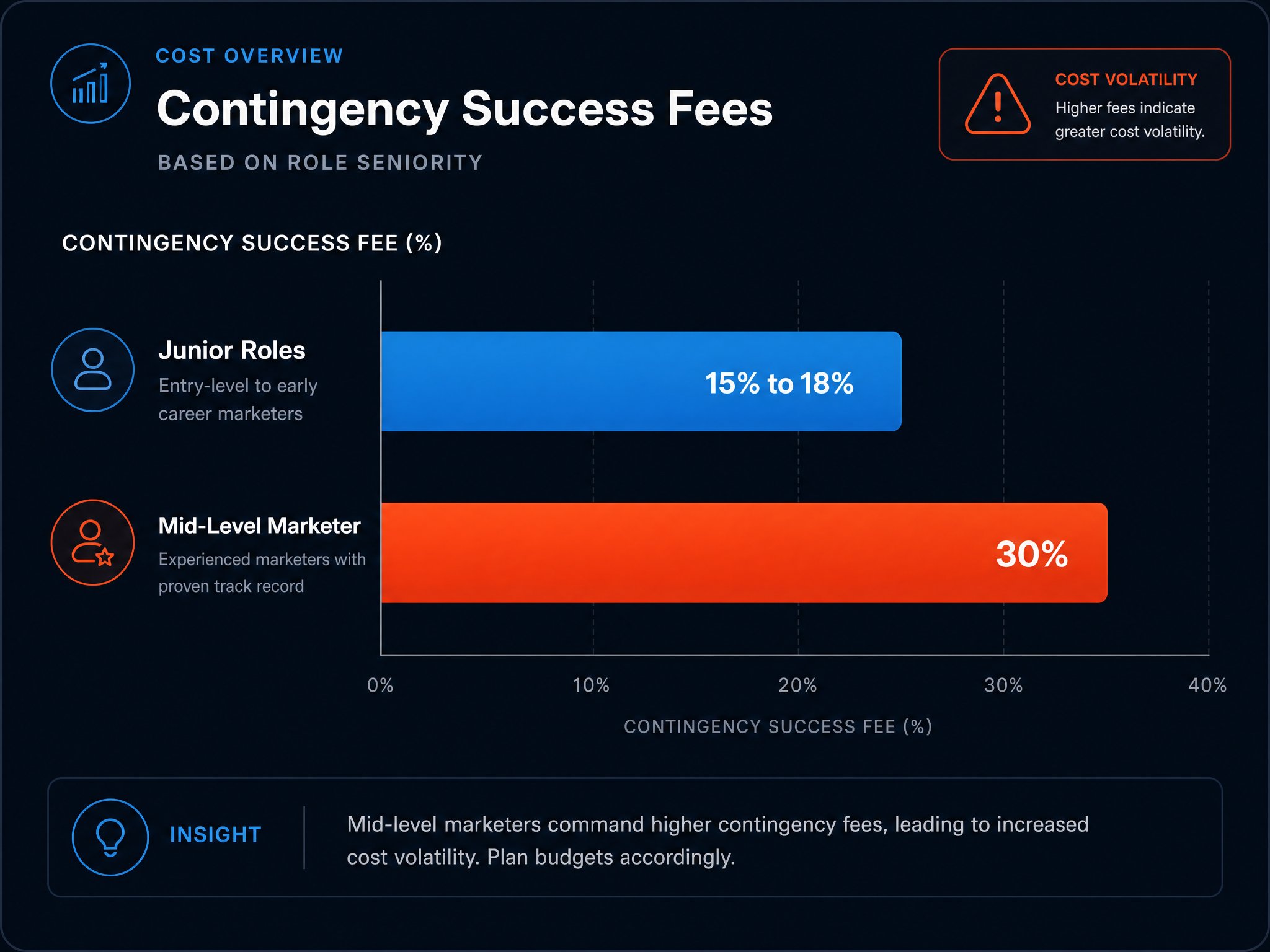
This is the classic contingency fee: you pay a percentage of annual salary only if the candidate starts. It’s the model most people associate with external recruiters, and it exists for a reason. When you need niche talent that isn’t applying on Eurojobs or polishing their LinkedIn “open to work” banner, contingency can pull them out.
The weakness is cost volatility. Your cost rises with salary, so senior hires get pricey fast, and it punishes you for paying market-clearing compensation. It also creates a subtle incentive to push you up the salary band, because the recruiter’s commission follows.
Negotiate. For junior roles, 15% to 18% is often reasonable. If someone asks for 30% for a mid-level marketer, I’d rather spend that money fixing my sourcing engine.
Good fit: Niche roles where speed matters and the talent isn’t actively job-hunting
Watch out: High percentages on mid-level roles, and misaligned salary pressure
Ask for: A realistic percentage, a guarantee, and clarity on what “start” means
7. Fund executive search upfront with retained recruitment
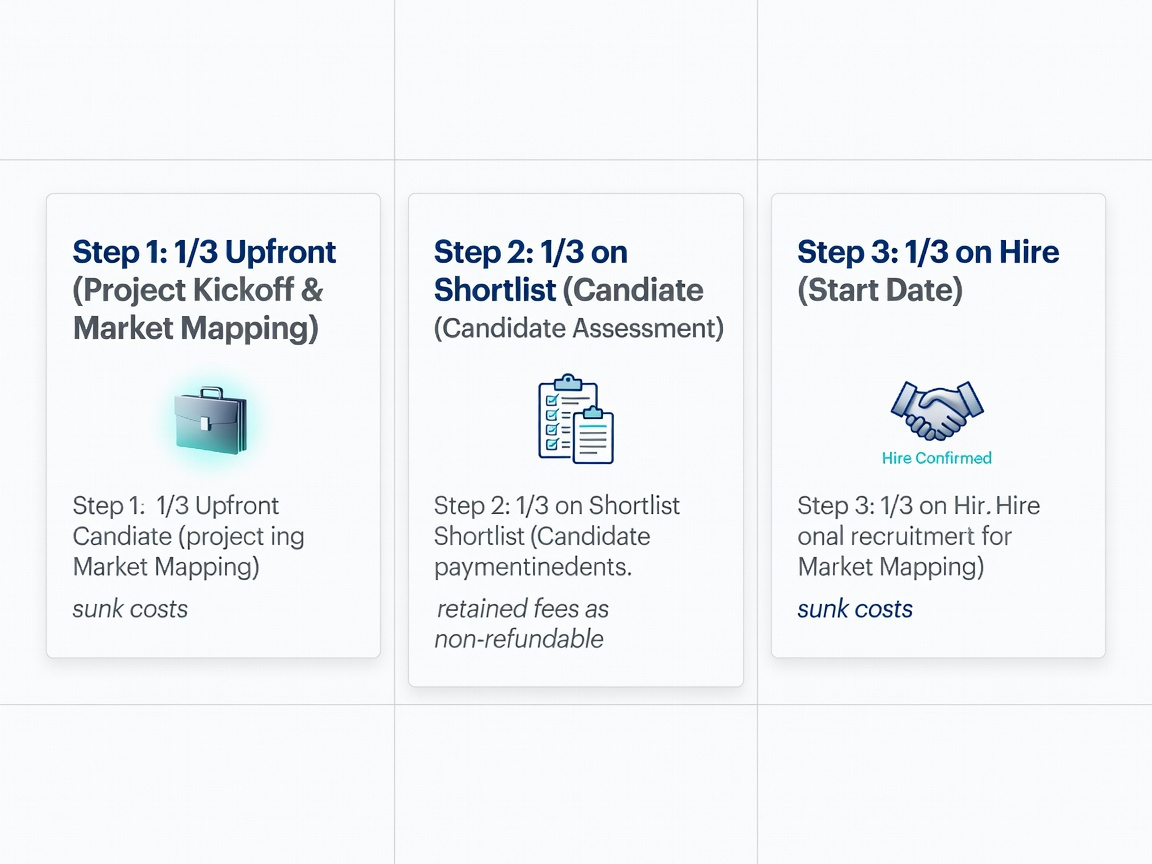
Retained recruitment is the one with real upfront costs: pay a third now, a third on shortlist, a third on hire. It’s positioned as “we’re serious” executive search, and sometimes that’s true. Sometimes it’s just a fancy invoice schedule with nicer slide decks.
This model only makes sense for roles where the search itself has value: C-suite, board-level, maybe a genuinely rare VP speciality. For normal hiring, it removes urgency because the recruitment partner has already been paid. You’re financing their pipeline, not purchasing an outcome.
Inclusions tend to be deeper: market mapping, discreet outreach, candidate assessment, sometimes psychometrics, sometimes stakeholder management. Still, your cost of a bad hire here is brutal because the fee is sunk early and the onboarding impact is bigger at exec level.
Good fit: True executive search where discretion and market mapping matter
Watch out: Using retained search for non-exec roles and buying slowness
Ask for: Milestone deliverables, shortlist quality criteria, and a meaningful guarantee
8. Access talent pools via subscription memberships
Subscription memberships are the “pay monthly, access the platform” pricing method. Think job boards, talent networks, lightweight sourcing tools, sometimes bundled outreach seats. It can be cheap, steady, and calming for finance because it looks like SaaS, not recruitment.
The trade is quality control. Many subscription pools have a lower bar for profiles because the platform’s economics rely on volume. You can absolutely hire well through them, but you’ll need sharper screening, better scorecards, and the patience to deal with noise.
Inclusions often cover messaging, search filters, maybe light ATS features. Watch for freemium pricing traps where the subscription fees look small until you need the features that make it usable, then the pricing plans jump and your “deal” evaporates.
If you’re trying to pick between managed placement and tool-based sourcing, the decision framing in managed placement vs freelance platforms is basically the argument you need to have internally.
Good fit: Ongoing, slow-paced hiring where you can invest time in screening
Watch out: Candidate volume that drags your team into low conversion rate sludge
Ask for: Clear tiered pricing plans, seat limits, and what happens at renewal
9. Expect take-rates on freelancer marketplaces per contract
Marketplace commission per contract is how platforms like Upwork-style ecosystems make their money: the freelancer has a rate, the platform takes a cut, and you get payment processing, dispute handling, sometimes escrow. The pricing is rarely presented as “we take 10% to 20% from someone”, it’s disguised inside the hourly rate you’re shown.
This is fine for contract work. It’s even brilliant for fast experiments, prototypes, short bursts of specialist help. It’s not a great remote model for building a team, because you’ll fight churn, availability, and the slow creep of “why are we paying marketplace tax for a relationship we already have?”
Inclusions usually stop at contracting mechanics, not global payroll, not EOR compliance, not benefits. Contractor classification is still your headache unless you’re using a proper contractor management product elsewhere.
Good fit: Short contract work where speed and variety beat long-term continuity
Watch out: Hidden platform take-rates baked into the headline number
Ask for: A breakdown of platform charges, dispute terms, and invoice control
10. Check role-based tiers before you scale headcount

Tiered pricing by role seniority is when the platform charges different fees depending on job type, complexity, or pay band. In theory, it’s fair. A senior engineer is harder to support than a VA, and a complicated equity plan creates more admin than a simple payslip.
In practice, this is where “scope creep” thrives. A junior role gets reclassified as intermediate because the title sounds fancy. A support role gets bumped because it touches regulated data. You scale headcount and the pricing method quietly escalates with it.
This is common in EOR and global payroll providers with modular pricing. You’ll see base fees plus add-ons for immigration, benefits administration, local entity support, or a payroll product upgrade. Hybrid pricing can be sensible, but it’s brutal if you don’t standardise job levelling and lock your preferred billing currency up front.
Good fit: Mixed teams where admin complexity genuinely varies by role and country
Watch out: Reclassification games that inflate fees as you scale
Ask for: Written tier definitions, re-tiering rules, and a capped escalation path
Conclusion
If you want the blunt decision framework: recruiter-fee models optimise for finding talent; structured remote hiring models optimise for employing and paying that talent compliantly across borders. When you confuse the two, you overpay twice, once for the hire, then again for the operational clean-up.
Performance pricing and subscriptions work when you can sift fast. Contingency and retained search work when the talent is scarce. Hourly staffing works when you value exit options. EOR-style tiering and hybrids work when compliance and global payroll are the real problem you’re trying to solve, not sourcing.
And if you’re hiring across Africa specifically, where salary bands, benefits norms, and employer-of-record realities vary more than people admit, it’s worth grounding your expectations with what sets elite placement services apart before you decide which pricing you can actually live with.
FAQ
Which pricing model is most predictable for budgeting?
Flat monthly fees, flat-fee per hire, and subscriptions tend to be easiest for forecasting. Percentage-based commission and percentage-of-payroll structures move with salary and create noisier budgets.
When is a recruiter commission actually worth it?
When you need scarce talent fast, or you need passive candidates who are not applying anywhere. Contingency success fees can outperform tools when your internal sourcing is weak.
What’s typically included in an EOR fee versus a recruiter fee?
EOR pricing usually covers employment contracts, local compliance, payroll runs, statutory filings, and sometimes benefits administration. Recruiter fees usually cover sourcing, screening, coordination, and offer support, but not employment compliance.
How do I reduce the cost of a bad hire across any model?
Tie payment milestones to outcomes that matter (start date plus guarantee), insist on role calibration, and don’t let anyone sell you “activity” as progress. Bad hire rates are often a process problem disguised as a talent problem.
What should I ask about currency and invoicing?
Ask for your preferred billing currency, how the remote FX rate is set, whether the provider adds an FX margin, and how disputes affect payment timelines. Tiny spreads become big costs at scale.
Is RPO better than subscription sourcing tools?
RPO buys capacity and process, tools buy access. If you have strong hiring managers and time, subscriptions can work. If you’re scaling and you’re operationally underpowered, RPO can work, but only with pipeline transparency.
