

Introduction
The best remote tech job boards for global engineering talent are the ones that tell you, up front, where you’re actually allowed to work from. We Work Remotely, Remotive, Himalayas, Working Nomads and Wellfound sit near the top of most shortlists, but “remote” on a listing is a marketing word, not a legal promise. Plenty of roles marked remote quietly mean “remote, if you live in Ohio.”
So this guide ranks nothing by popularity. It sorts boards by how honest they are about location, pay and contractor terms, then shows job seekers how to dodge fake listings and employers how to hire across borders without tripping over payroll rules.
What Are the Best Remote Tech Job Boards?
Honestly, generic “best remote job board” lists bore me. They shuffle the same ten logos and never ask the only question that matters. Can I, living where I live, actually take this job?
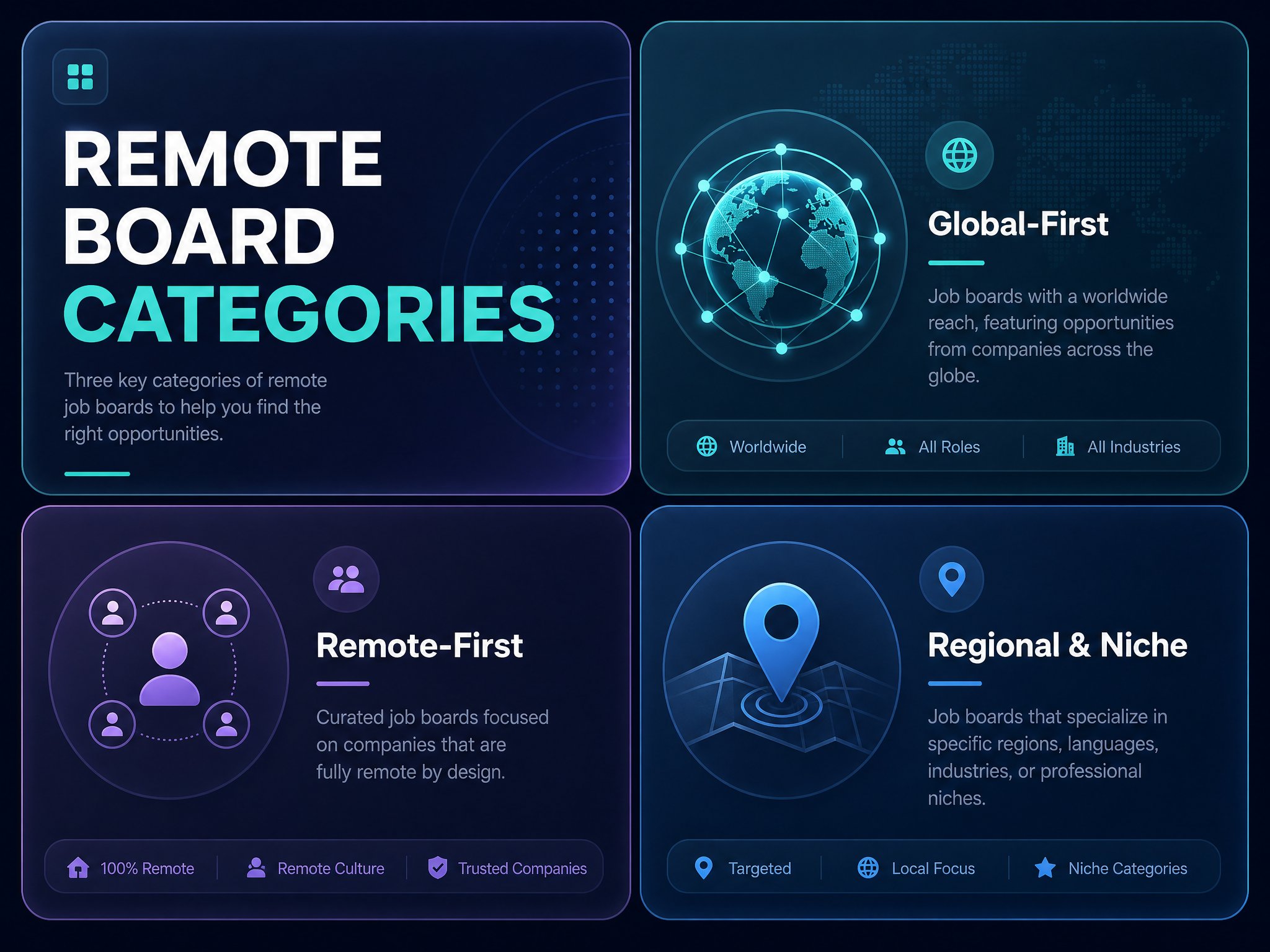
Three buckets help more than any ranking.
Global-First Boards
These are the ones I’d open first. A global-first board treats worldwide hiring as the point, not a footnote. The Real Work From Anywhere site, passed around in a recent community thread, is the cleanest example: every listing is meant to be open to candidates in any country. If a company is genuinely open to global talent, that’s the signal I care about. A shiny remote tag is just decoration.
Working Nomads deserves a mention here too, since it sorts location-flexible roles by time zone and specialism, which is exactly how a distributed engineer thinks.
Remote-First Boards
We Work Remotely is among the oldest and biggest, with a huge audience of remote-focused professionals and a heavy lean towards software development. Remotive curates tech listings with a more editorial hand. Jobspresso hand-picks vacancies from verified remote-first companies, so the volume is smaller but the noise is lower.
Remote-first means the company runs without a central office. It does not automatically mean it hires everywhere. Keep those two ideas apart in your head.
Regional and Niche Boards
Regional boards earn their keep when you’re hunting inside a specific market. One India-focused thread lists 15 boards and says India ranks among the top three remote-tech talent hubs. Fine. Believable, even. I’d still check each job against my own location before spending an evening on a cover letter. For other markets and languages, this roundup of niche remote job boards by region is a decent starting map.
Design-leaning developers might also try Dribbble’s jobs section, where frontend and product roles land as remote contracts.
How Do Remote Job Boards Compare?

Here’s the quick view. It’s my read, not gospel, and boards change their filters often.
Board | Best for | Location clarity | Typical fit |
|---|---|---|---|
We Work Remotely | Software, devops, support | Mixed; read each post | Mid to senior |
Remotive | Curated tech roles | Fairly good | Mid to senior |
Himalayas | Company research | Strong, explicit restrictions | All levels |
Wellfound | Startups, equity | Varies by startup | Early-stage, generalists |
Working Nomads | Time-zone filtering | Good | Mid level |
Jobspresso | Vetted remote-first firms | Moderate | Mid level |
For a wider side-by-side, the comparison guide to remote tech boards goes deeper.
Location Rules
A board that hides location rules wastes your time. Full stop. Himalayas is the standout, showing hiring restrictions and time-zone overlap on company profiles. Others bury “US only” in the third paragraph of a job description. Read to the bottom, always.
Salary Transparency
Wellfound routinely surfaces salary ranges and equity, which is rare enough to be worth celebrating. Elsewhere, expect gaps. A missing range on a global role often hides a location-based pay band, so ask early.
Role and Seniority Fit
Juniors struggle on most remote boards, honestly. Employers posting there tend to want people who can work unsupervised across time zones. Seniors and specialists do better. Startups on Wellfound will take a gamble on a scrappy generalist more readily than a bank’s remote engineering team will.
Which Boards Truly Hire Anywhere in the World?
Fewer than you’d hope. Maybe a fifth of listings on a typical remote board are open worldwide, and my guess is that figure is generous.
Location-Verified Listings
Look for boards that make employers choose between “worldwide”, “region-limited” and “country-specific” when posting. If the board doesn’t force that choice, the data will be sloppy. NoDesk publishes company profiles and location-filtering guidance that help you see past vague wording.
Timezone and Contractor Terms
“Worldwide” can still mean “be online 9 to 5 Pacific.” That’s a time-zone requirement dressed up as openness. And many global roles are contractor positions, not employment, so you invoice, pay your own tax, and get no paid leave. Neither is bad. Both should be known before you apply.
Regional Talent Hubs
India, Eastern Europe, Latin America and Nigeria all supply huge volumes of engineers to remote teams. Global means global, not “remote, except where you live.” Check each posting, every time, no exceptions.
What Should You Check Before Applying Globally?

Run through this before you write a single line of cover letter:
Does the listing name your country, or at least your region, as eligible?
Is it employment through an entity, or contractor work paid by invoice?
Which working hours must overlap with the team?
Will the company sponsor or support anything if rules change?
Eligibility Filters
Use board filters, then distrust them. Filters rely on what the employer typed in, and employers get lazy. Email a recruiter if the listing is ambiguous. A two-line question beats a wasted week.
Visa and Work Authorisation
Remote work abroad is not the same as a right to work there. If you’re relocating, you need the proper visa in the destination country. If you’re staying home and working for a foreign firm, you usually don’t, but some countries treat that differently. Check official government guidance. Don’t take a recruiter’s word as legal advice.
Tax and Payroll Setup
Contractors handle their own tax and sometimes local registration. Employees hired through an employer of record get payroll handled for them. Deel’s overview of job boards touches on how global hiring and compliance fit together, which is useful background for both sides.
How Can You Spot Fake Remote Job Listings?

Fake listings are depressingly common, and they follow patterns. Interviews run entirely over chat apps. Pay is huge for trivial work. Someone asks for your bank details, a “equipment deposit”, or identity documents before any offer exists. The company has no footprint beyond a freshly made LinkedIn page.
Verify the employer’s domain, search for the recruiter by name, and compare the job on the company’s own careers page. Boards that screen by hand, like FlexJobs, cut a lot of this out, though a paywall isn’t a guarantee. If a role makes your stomach twist, trust the stomach.
How Do You Improve Your Remote Tech Job Search?
Stop applying to everything. Pick two or three boards, set alerts using your exact stack and location, and apply within a day or two of posting, since remote roles flood fast.
Build a one-page profile that shows async skills: written communication, documented projects, pull requests anyone can read. Remote hiring managers are reading for self-direction as much as for your tech chops. Then use the board as a lead source only. Once you spot a promising company, go to its careers page and look at the people already working there.
Job Board or Curated Talent Platform?
A job board lets anyone post and anyone apply. A curated platform vets people before matching them to roles. Toptal sits at the demanding end of that spectrum, with a screened network of freelancers across 140+ countries. Boards are cheaper and noisier. Platforms are quicker and pricier. This explainer on talent marketplace versus job board lays out the trade-offs neatly.
How Can Employers Hire Remote Tech Talent Across Borders?
Start by deciding, honestly, where you can hire. Not where you’d like to. If legal, payroll or time-zone limits exist, state them in the posting itself, because candidates will respect that and skip the guesswork.
Post to two or three boards matching your seniority needs, then add outbound sourcing for harder skills. For senior engineers, this guide to remote-first job boards for senior hires is worth a read. Companies spanning many zones should also check platforms built for hiring across time zones.
Show the salary range. It filters time-wasters and signals trust.
What Are Common Global Hiring and Compensation Challenges?

Pay is the thorniest. Do you pay by location, or one global rate? Location-based pay is cheaper but breeds resentment; flat rates are fair but costly. Neither is wrong. Pick one and explain it.
Then there’s compliance. Misclassifying a full-time engineer as a contractor can bring penalties in many countries. Currency swings, local benefits and IP assignment clauses all need attention. Employer-of-record services take much of the admin off your plate, at a fee. Worth it for small teams without in-house legal support.
FAQ
Which remote tech job board is best for global candidates?
Himalayas and Working Nomads are strongest on location clarity, while We Work Remotely offers the most volume. Whichever you use, check eligibility on each listing.
Does “remote” mean I can work from any country?
No. Remote means not in an office. Employers often limit hiring to certain countries or time zones for tax, legal or collaboration reasons.
Do I need a visa to work remotely for a foreign company?
Usually not if you stay in your home country, though rules differ. Moving abroad to work typically requires the proper visa or permit there.
How do I know a remote listing is real?
Check the company domain, the careers page and the recruiter’s identity. Never pay anything or share bank details before a signed offer.
Can employers hire developers without setting up a local entity?
Yes, through contractor agreements or an employer of record, depending on the country and the nature of the role.
Conclusion
Boards are only a way in. What matters is whether a company will genuinely hire you where you live, on terms you understand. Start with global-first boards, treat every “remote” tag with mild suspicion, and confirm location, pay and contract type before applying. Employers, meanwhile, should publish their limits openly. For a broader shortlist, see this 2026 roundup of remote tech boards and keep going.
